
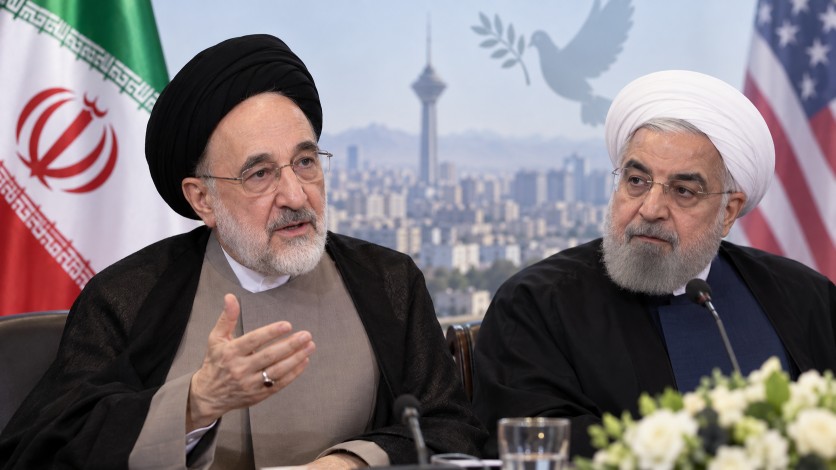
Amidst rising tensions between the United States and Iran, two former Iranian presidents, Mohammad Khatami and Hassan Rouhani, have made a public appeal for peace. They are advocating for a resolution to the conflict that is both “honourable” and “dignified,” directly challenging the nation’s hardline rhetoric that has been prevalent in recent years. Rouhani has gone a step further by suggesting that Iran’s citizens should have a say in the nation’s foreign policy decisions, especially concerning whether to continue a prolonged state of conflict with major international powers. During a recent discussion with former government officials, Rouhani questioned the sustainability of an ongoing confrontation without the people’s backing.
Khatami has echoed similar sentiments, cautioning against managing the country based on continuous wartime emotions. He supports an approach that prioritizes diplomacy and negotiations, emphasizing that the long-term national interests of Iran should overshadow persistent calls for confrontation. These views, however, have sparked a fierce backlash from conservative circles within Iran. Hardline media outlets have accused the former presidents of advocating surrender, and public demonstrations have featured chants opposing these calls for compromise. The editor of the conservative newspaper Kayhan has even called for an investigation into the actions of the former leaders.
The debate within Iran comes at a time of significant economic challenges. The country is grappling with rising fuel prices and a decline in oil revenue, which are exacerbating economic pressure. Additionally, tensions surrounding the Strait of Hormuz continue to pose a threat to global energy markets. Despite these pressures, Iranian officials have maintained a tough public stance, suggesting that Tehran might adopt a more aggressive military approach if diplomatic efforts with Washington do not yield results. This stance raises concerns that the economic strain could lead to further escalation in the region rather than prompt immediate concessions.
Meanwhile, there are ongoing diplomatic efforts in the region, with Saudi Arabia and Iran engaging in discussions to address regional tensions. Senior officials from both countries are working to find ways to prevent further escalation and to foster stability. This diplomatic dialogue contrasts sharply with the internal divide in Iran, where former leaders are pushing for negotiations and greater public involvement in foreign policy decisions, while the current leadership warns of possible military escalation if their demands remain unmet.