
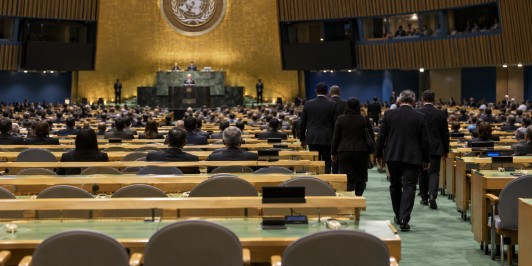
Amid heightened global tensions, US President Donald Trump addressed the United Nations General Assembly on September 22, critiquing both Iran and Cuba and prompting representatives from these nations to walk out of the assembly. The incident underscored the strained relations between the US and these countries, as Trump outlined his administration’s foreign policy stance.
During his speech, Trump focused on the ongoing conflict with Iran, highlighting US military actions and the potential for further measures if a diplomatic agreement is not achieved. This part of the address led the Iranian delegation to exit the chamber. Although Iranian President Masoud Pezeshkian and Foreign Minister Abbas Araghchi were in New York for the assembly, they were not present during Trump’s remarks. Trump emphasized the US’s choice between negotiating with Iran or intensifying actions against the Islamic Republic, urging international partners to increase economic pressure on Tehran.
The situation further escalated when the Cuban delegation left the assembly after Trump labeled Cuba a “failed state.” He spoke of his administration’s desire for significant changes in Cuba, asserting that the US would not permit adversarial nations to establish a foothold on the island. Trump’s comments about the future of freedom in Cuba highlighted his administration’s continued hardline stance toward the country.
These walkouts occurred as Trump presented his administration’s positions on a range of international issues to world leaders gathered at the UN General Assembly. The incidents with Iran and Cuba reflect ongoing geopolitical challenges and the Trump administration’s assertive approach to foreign policy, particularly concerning nations with contentious relationships with the United States.