
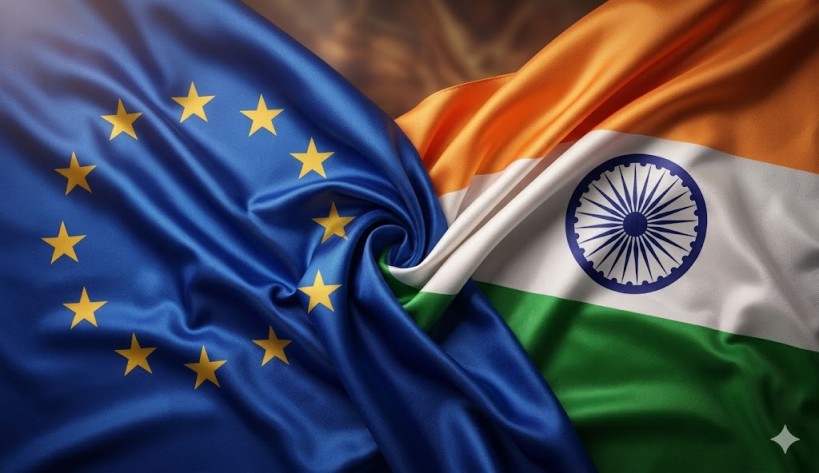
In a significant move towards enhancing global trade relations, India and the European Union have committed to fast-tracking the finalization of a Free Trade Agreement (FTA) by the end of this year. This development represents a crucial advancement in what is projected to be one of the world’s largest trade alliances. The announcement was made following a trilateral meeting that took place on the periphery of the G7 Summit in Evian, France, involving Indian Prime Minister Narendra Modi, European Council President António Costa, and European Commission President Ursula von der Leyen.
The leaders characterized the prospective agreement as a comprehensive framework that will encompass goods, services, digital trade, investment, and technological collaboration. Once established, this agreement is set to create an extensive free trade zone that would connect almost two billion individuals, accounting for approximately a quarter of the global economic output. Both India and the EU have also expressed intentions to broaden their cooperation in defense, connectivity, and strategic infrastructure projects, notably including the India–Middle East–Europe Economic Corridor.
Progress in the negotiations has been swift since the talks concluded earlier this year, and both parties are now concentrating on resolving legal and technical details in preparation for the formal signing. EU officials have positioned this deal as a pivotal framework to enhance economic integration between the two regions, especially as worldwide supply chains continue to shift. This partnership is seen as a strategic asset in tackling the economic and geopolitical challenges on the global stage.
Prime Minister Modi underscored the significance of strengthening India-EU relations, highlighting their role in fostering stability and inclusive economic growth. Meanwhile, European leaders emphasized the partnership’s strategic importance, particularly in the current global context. The trilateral discussions also addressed broader themes of trade and investment, along with regional and global matters of mutual interest. Officials from both sides noted the strong momentum in their engagements and anticipated ongoing high-level discussions in the months leading up to the anticipated signing of the agreement.