
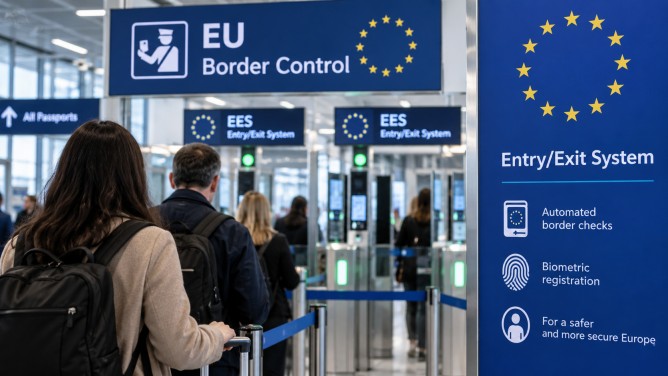
As Europe grapples with the challenges of implementing advanced border security measures, nine countries, including France, Greece, and Italy, are postponing the full rollout of the European Union’s Entry/Exit System (EES). This system, designed to enhance security by recording biometric data of non-EU travelers entering the Schengen area, faces technical and operational hurdles that have led to staggered implementation across the continent.
The EES, officially launched last October, mandates the collection of fingerprints and facial images to bolster border security. However, the transition has been anything but smooth, particularly at major international airports and other high-traffic border crossings. Countries such as Germany, Malta, and the Netherlands are among those seeking additional time to fully integrate these checks, citing infrastructural and capacity issues.
Despite the delays, some progress has been made. Spain has successfully navigated initial challenges and moved forward with full implementation. Meanwhile, biometric checks have commenced at certain points like the Eurostar terminals in Brussels and Antwerp port, although many airports, including smaller ones, continue to adjust their facilities to accommodate the new system.
The EES has already registered approximately 200 million entries and prevented around 70,000 individuals from entering the Schengen area, primarily due to visa issues, overstays, or the use of forged documents. Nonetheless, the uneven application of these measures across different countries has raised concerns within the travel industry.
The International Air Transport Association has expressed worries about potential delays, particularly during peak travel periods. To mitigate these issues, a pre-travel application named “Travel to Europe” is being trialed in Sweden and Portugal, allowing travelers to submit necessary documentation before arrival, with plans for expansion to other regions.
As the EU continues to address these logistical challenges, the phased approach aims to ensure a balance between enhanced security and maintaining smooth travel experiences across the Schengen area.