
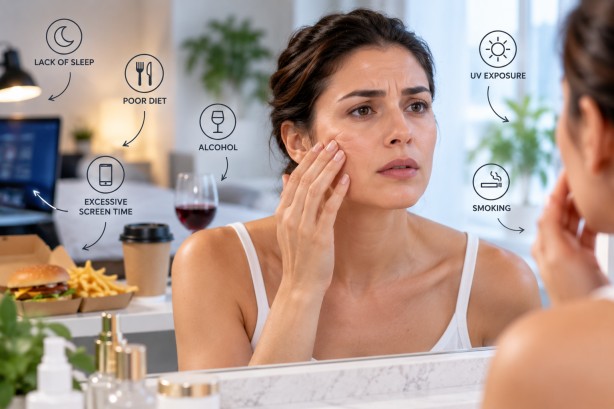
In today’s fast-paced world, the demands of modern living can often leave their mark on our skin. The hustle and bustle of our daily routines, characterized by extended screen time, mounting stress, exposure to pollutants, and irregular sleep patterns, can gradually influence the way our skin looks and feels. Although ageing is an inevitable part of life, how quickly signs like dullness, dryness, uneven skin tone, breakouts, and fine lines appear can be affected by our everyday lifestyle choices.
Digital devices have become an integral part of our lives, with many people spending hours each day in front of screens. While sunlight remains the primary source of UV exposure, the impact of prolonged screen use on skin health is often indirect, stemming from habits such as late nights and insufficient physical activity. Implementing regular screen breaks, particularly before bedtime, can foster healthier daily routines and support better skin health.
Stress is another factor that can leave visible traces on our skin. The constant pressure of modern life can manifest in various skin issues, including breakouts, increased sensitivity, dryness, and a fatigued appearance. Engaging in simple stress-relief activities like regular exercise, meditation, deep breathing exercises, and hobbies can help in managing stress levels effectively.
Urban living, with its constant exposure to dust, smoke, and other pollutants, poses additional challenges for maintaining a healthy complexion. These environmental factors can elevate oxidative stress and may lead to a dull or uneven skin tone over time. Adopting a straightforward skincare routine, including keeping the face clean and minimizing exposure to polluted areas, can contribute to healthier-looking skin.
Ensuring adequate sleep is crucial for maintaining skin health. Consistent sleep patterns are among the simplest yet most effective ways to enhance overall wellbeing. Insufficient sleep can result in tired-looking skin, puffiness, dark circles, and a lackluster appearance. Striving for seven to eight hours of quality sleep and establishing a regular bedtime can make a significant difference. Additionally, limiting late-night screen time may improve sleep quality. Ultimately, achieving healthier skin does not necessarily require complex skincare regimens but rather a focus on sustainable habits such as hydration, balanced nutrition, regular physical activity, and sun protection. These everyday practices, along with stress management and quality sleep, can lead to a noticeable improvement in skin appearance over time.